What Is Tantra Yoga? A Real Explanation, Beyond the Myths
Almost every time I tell someone I teach Tantra Yoga, there is a small pause. A flicker in the eyes. Sometimes a smirk. Sometimes a nod that is trying very hard not to look curious.
I get it. Open Google, type the word tantra, and you will see why.
But Tantra Yoga, the actual practice, has very little to do with what the internet has turned it into. It is older. Quieter. More grounded. And honestly, it is one of the most misunderstood paths in all of yoga.
So let me try to clear the air.
What Tantra Yoga Actually Means
The word tantra comes from Sanskrit. It loosely translates as "to weave" or "to expand." Tantra Yoga, then, is a yoga that weaves your body, breath, mind and emotions into a single conscious experience of being alive.
Most schools of yoga that you might already know, like Hatha, Ashtanga or Vinyasa, use the body as the starting point. They work from the outside inward. Tantra works the other way. It begins with awareness, with what is already happening inside you, and uses the body, breath and mind as instruments to deepen that awareness.
In a Tantric framework, your body is not a problem to fix or a temple to keep pure. It is a doorway. Your breath is not just oxygen; it is a thread you can follow inward. Your emotions are not distractions to silence; they are information.
Nothing is rejected. That is the heart of it.
A Quick Word on Where It Came From
Tantra did not come from a single book or a single teacher. It grew across India between roughly the 5th and 12th centuries, weaving its way into both Hindu and Buddhist traditions. There were many lineages. Some focused on sound and mantra. Some on visualisation. Some on the body as a map of energy.
A few of them used practices that, on the surface, looked taboo: eating meat, drinking, ritual union. But always with a specific intention, which was to break the mind's grip on what is "good" and "bad," "pure" and "impure."
This is where the modern confusion started. Western interpretations latched on to the most provocative bits and lost the rest. The cartoon version of tantra you see online today is the result.
What we teach now, what most serious teachers teach, is closer to the original spirit: a practice of awareness through the body, not a practice of indulgence.
How Tantra Yoga Differs from the Yoga You Already Know
If you have been to a regular yoga class, you will recognise pieces of Tantra. Asana (postures), pranayama (breathwork), and meditation all live inside Tantric practice too.
But the emphasis shifts.
In Tantra Yoga, a posture is not something to perfect. It is something to feel from the inside. The breath is not just a warm-up. It is the practice itself. Mantra and sound are not decorative; they are tools to shift your inner state. And your attention is what is being trained, more than your hamstrings.
You can be in a very simple seated pose and be doing serious Tantric work. You can also be in a complicated handstand and be doing none.
What Actually Happens in a Tantra Yoga Session
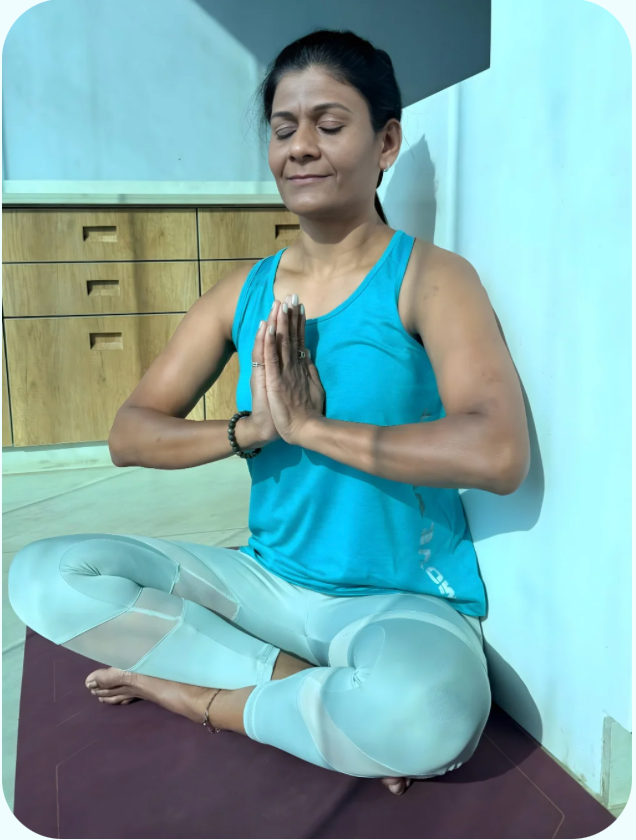
A typical online Tantra Yoga session with me starts slow. We sit. We breathe. Sometimes we chant. We move through soft, conscious postures, never rushed. There is usually a guided meditation, and almost always a moment where I ask you to drop your attention into a specific part of the body and just stay there.
It is quiet work. There is nothing to perform.
Most students tell me that the strangest part, in the beginning, is how much they want to do something. Tantra is mostly about un-doing.
Some sessions feel still. Some feel emotional. A few people cry. A few laugh. A few feel nothing for the first three classes and then something cracks open in the fourth.
That is all normal.
What Tantra Yoga Is Not
Let me say it directly.
Tantra Yoga is not about sex. There are sub-lineages where partnered practices exist, but they are a tiny corner of a much larger system, and they were never recreational. Treating tantra like a sensual workshop is a bit like calling Shakespeare a vocabulary list.
It is also not a quick fix. You do not walk out of one session "awakened." Awareness builds slowly, the way trust builds. A few minutes a day, every day, does more than three hours once a month.
And it is not exotic. It is not floating, levitating, or visions. It is far more useful than that. It is catching yourself snapping at someone and choosing not to. It is noticing your breath shorten in traffic. It is eating a meal and actually tasting it.
The Benefits People Notice
I will not list these like a brochure, but here is what I hear from students after a few months of consistent practice.
Sleep gets deeper. Reactions get slower, in a good way. Relationships shift, sometimes uncomfortably at first. Old emotions surface and pass through more cleanly. Energy levels stop swinging wildly. There is a quiet sense of being more here.
It is not euphoric. It is something better. It is steady.
A Small Practice You Can Try Tonight
You do not need a teacher for this one. Try it before bed.
Sit or lie down comfortably. Close your eyes. Breathe in slowly for a count of four, breathe out for a count of six. Do not force it.
As you exhale, imagine the breath settling from the crown of your head down to the base of your spine, like water finding its level. Do this for five minutes. That is it.
If your mind wanders, that is not failure. Noticing the wandering is the practice. Come back. Wander again. Come back again.
This single practice, if you do it daily for a few weeks, will tell you more about Tantra Yoga than any article can.
So, Is Tantra Yoga for You?
Tantra Yoga is not for people looking for a workout. It is for people who feel they are moving through life slightly disconnected from themselves, and want to come home.
If something in you nodded while reading this, that is probably your answer.
Want to experience this practice?
We run live online Tantra Yoga classes open to all levels. Beginners welcome.
Get in TouchFrequently Asked Questions
Yes. Most Tantric practices are gentle and inward. There is no athletic threshold to clear. If you can sit and breathe, you can begin.
No. Tantra works with awareness, which does not require belief. Many of my students are not religious at all.
Yes. Online sessions actually suit Tantric practice very well, because they are quiet and inward by nature. We run live online Tantra Yoga classes for all levels.
No. The internet has confused things. Real Tantra Yoga is about awareness, energy and presence - not sex.
A short daily practice of 15 to 20 minutes does much more than long, occasional sessions. Consistency, not intensity, is the key in Tantra.